Health, Safety and Fire Services for Educational Establishments
We offer a range of services to enable schools, academies and colleges to comply with their health, safety and fire responsibilities. The green blocks below expand to show further information on specific service ranges we provide to education establishments - click to view.
Health & Safety Advisory Services
In order to be able to effectively and efficiently manage health and safety in a school or college the employer needs to have access to competent advice. Schools and colleges can have access to competent advice from a number of sources (in-house, consultants or a combination of both). For most education sector employers the option to have a totally in-house source of competent advice is not practical for the following reasons:
- the range of hazards for which competence is required;
- the depth of knowledge required on the hazards present in the school or college;
- understanding of safety management systems;
- the employment costs of having full-time specialist competent persons on the staff;
The oneSource Health and Safety Team has extensive experience in assisting establishments to manage health and safety in schools, academies, multi-academy trusts and colleges. A key part of the work which we do with clients is developing their in-house competency. This can be through workshops, training, working 1:1 with staff members to improve their practical skills, understanding or confidence, or simply providing advice on the external specialst training which is required.
Having worked with education clients for a long time we appreciate that managing health and safety in colleges and schools is not your foremost concern. Therefore our school safety management systems are designed to achieve the highest standards of health and safety compliance with the minimum use of client's resources. The Health and Safety Manual which we provide to clients is an example of how we have reduced their administrative burden. The Manual serves several purposes, it:
- forms part of the client's health and safety policy;
- can be the client's risk assessment for a large proportion of their risks;
- provides guidance on managing and assessing risks, for which the Manual itself cannot be the risk assessment.
- Three half days of on-site support visits per year. The visits include a core monitoring element and a support element. The monitoring element is designed to ensure that there is continuous improvement in the school's health and safety management system. This can include audits of the establishment’s health & safety management system, the frequency of these is decided by the establishment’s risk rating. The support element is flexible to enable best use of the advisory support time. The options available include training workshops, assistance in developing policy and supporting documents (including risk assessments) & inspections;
- Access to telephone & e-mail advice throughout the contract period (weekdays 9am to 5pm);
- Access to the policy and guidance developed by the School’s Health & Safety Team. The Service supports the continuing development of these;
- Reduced prices for attendance at training courses. Please see the Health and Safety Training Courses tab below for more information on the range of courses available.
- Reduced subscription to the Civica task recording system. It can be used to manage the performance of school health and safety related tasks (e.g. weekly testing fire alarm actuation points, fire drills, water outlet flushing etc.). The system will remind responsible employees and notify managers of non-compliance. It is offered to subscribing schools and colleges at a discounted price to direct purchase from the provider.
- Initial and audit years;
- Non-audit years.
- Half-day on-site health and safety management system audit;
- Access to telephone & e-mail advice throughout the contract period (weekdays 9am to 5pm);
- Access to the policy and guidance developed by the School’s Health & Safety Team. The Service supports the continuing development of these;
- Reduced prices for attendance at training courses. Please see the Health and Safety Training Courses tab below for more information on the range of courses available.
- Reduced subscription to the Civica task recording system. It can be used to manage the performance of health & safety related tasks (e.g. weekly testing fire alarm actuation points, fire drills, water outlet flushing etc.). The system will remind responsible employees and notify managers of non-compliance. It is offered to subscribing establishments at a discounted price to direct purchase from the provider.
- Access to telephone & e-mail advice throughout the contract period (weekdays 9am to 5pm);
- Access to the policy and guidance developed by the School’s Health & Safety Team;
- Reduced prices for attendance at training courses. Please see the Health and Safety Training Courses tab below for more information on the range of courses available.
- Reduced subscription to the Civica task recording system. It is offered to subscribing schools and colleges at a discounted price to direct purchase from the provider.
- Full Remote Advisory Service - (two 1.5 hour on-line advisor support sessions per term);
- Half Remote Advisory Service - (one 1.5 hour on-line advisor support session per term);
- Hybrid Advisory Service - (two 1.5 hour on-line advisor support sessions for two terms + one on-site support visit for 1 term).
- Noise;
- Hand-arm vibration.
Service options
The Health and Safety Advisory Service is available different versions to suit client's needs:
Our experience in assisting schools, academies and colleges to develop and maintain safety management systems (SMS) has shown that investment in on-site support results in more effective development, implementation and integration of the SMS. This leads to improved management of criminal & civil litigation risks, reduced wastage of resources and improved business outcomes.
What the service provides
* Services available as optional extras are charged at cost.
The remote advisory service is available for schools and colleges with mature safety management systems which do not require on-site support and those establishments which are geographically remote to the oneSource Advisory Services’ staff bases. The service delivery is divided into 2 categories:
What the service provides
Initial/audit years
Non-audit years
These advisory services provide greater flexibility in the type of support available to schools and colleges and are particularly well suited to establishments which are geographically remote to the oneSource Advisory Services’ staff bases.
What the service provides
These services consist of all the elements of the on-site service but with differing models of support visits. The three options are:
Bespoke services tailored to specific needs can also be provided. Please contact us to discuss your specific needs.
Health & Safety Audits & Inspections
The Team can undertake stand-alone audits of your school or academy's health and safety management system (SMS). The audit we use is based on the requirements identiifed in the HSE's HSG65 - Successful Health and Safety Management and focusses on the management systems, that build reliability and business continuity into an establishment's SMS, rather than individual parts of the system (for example water outlet temperatures when considering a legionella management system). Clients are provided with a summary report, a detailed action plan and a visual representation of their SMS' current status.
Specialised Risk Assessments
The oneSource Health and Safety Team is able to undertake the following specialised risk assessments for schools and colleges:
Health and safety training is a useful method for schools, academies and colleges to establish and maintain the competence of their staff. We provide both face-to-face and e-learning courses.
The oneSource Health and Safety Team offers a range of courses, most of which have been developed specifically for the purpose of school safety training. They therefore contain school-based exercises and case studies. Our trainers all have extensive experience of working with schools, academies and colleges from their roles as health and safety or technical advisers. If your delegates ask questions on courses they will know the answers they receive are not general "catch-alls" but appropriate for their needs based on our practical experience of working with schools and colleges.
For your convenience the health and safety courses have been put into groups. Click on the green headings to see further information on the courses:
The following courses are routinely delivered:
Health and Safety Awareness for Managers (½ Day).

Who is this course suitable for?
This course is recommended for managers and supervisors who do not need the level of knowledge & skills included in the IOSH Managing Safely course (e.g. heads of department, project leads etc.)
Course Overview
This course is designed to make managers and supervisors in schools and colleges aware of their responsibilities in relation to health & safety.
Delegates will learn about safety management systems, why they should manage health and safety in colleges and schools, recent school/college case law, hazard and risk, and the causes of accidents.
There is a short written test at the end of this course. Successful delegates will be issued with a certificate

Risk Assessment (½ Day)
Who is this course suitable for?
This course is recommended for anyone in a school or college who is required to undertake simple risk assessments of their team's activities.
Course Overview
This course is designed to enable employees to be able to develop the skills necessary to be able to undertake basic risk assessments.
Delegates' competence and confidence in undertaking risk assessments will be developed through a series of practical exercises. They will learn about the legislation that requires schools and colleges to undertake risk assessments, become aware of the limitations of their own competence and be able to identify where additional training or specialist help may be required.
There is a short written test at the end of the course. Successful delegates will be issued with a certificate.
Manual Handling Risk Assessment (1 Day)
Who is this course suitable for?
This course is suitable for schools and college managers and supervisors who need to complete manual handling assessments for the activities which their staff undertake involving the transporting/supporting of inanimate objects.
Course Overview
This course consists of two sessions. During the first session delegates will learn about the risks associated with manual handling and how to handle objects in a safe and efficient manner. This is essential if they are to be able to supervise their staff correctly and appreciate the consequences of decisions made during risk assessment.
The second session will enable delegates to develop their understanding of the need for manual handling risk assessments, and their practical assessment skills through a series of exercises.
This is an assessed course and delegates will sit a written examination at the end of the day. Successful delegates will be issued with a certificate.
Information on prices is included in the Frequently Asked Questions Section.
Asbestos Awareness (1.5 hours)

Who is this course suitable for?
This course is suitable for school and college managers and employees who either manage contractors/employees or staff who directly undertake work which could impact the fabric of the building..
Course Overview
This course will inform delegates about the risks posed by inhaling asbestos fibres, the locations where asbestos containing materials are commonly found in school/college buildings and how asbestos should be managed.
Manual Handling (½ Day)

Who is this course suitable for?
This course is suitable for schools and college employees who have to undertake manual handling tasks on a regular basis.
Course Overview
This course is designed to develop delegates understanding of the risks associated with the manual handling of objects. Delegates will learn about the types and severity of injuries which can happen during manual handling operations.The types of movement which cause these injuries, as well as a number of safe handling techniques covering lifting/lowering & pushing/pulling.
Due to the nature of the risk the Manual Handling course includes a large practical element. Delegates must therefore be reasonably fit. This course is accessed during the practical element, successful delegates will have demonstrated that they are able to undertake manual handling tasks using a safe handling technique and will be issued with a competence certificate.
Building Personal Resilience (½ Day)

Who is this course suitable for?
This course is suitable for employees whose work is likely to put them under a level of pressure.This course will assist individual employees to improve their personal resilience.
Course Overview
Personal resilience is the capacity to maintain well-being and work performance under pressure, including being able to bounce-back from set backs effectively. Resilience is a combination of personal characteristics and learned skills. This course utilises the apprroach & systems developed by Robertson Cooper (one of the UK's leaders in stress management) to help delegates understand, build and develop their resilience in order to be able to respond effectively to the challenges of their roles. The course includes a number of tools assist delegates to improve their resilience.
Prior to the course delegates must complete a confidential on-line questionnaire. Each delegate will receive their own personalised i-resilience report which will highlight areas of their personality/response to situations which will either help or hinder their ability to cope.
COSHH Awareness (1.5 hours)
Who is this course suitable for?
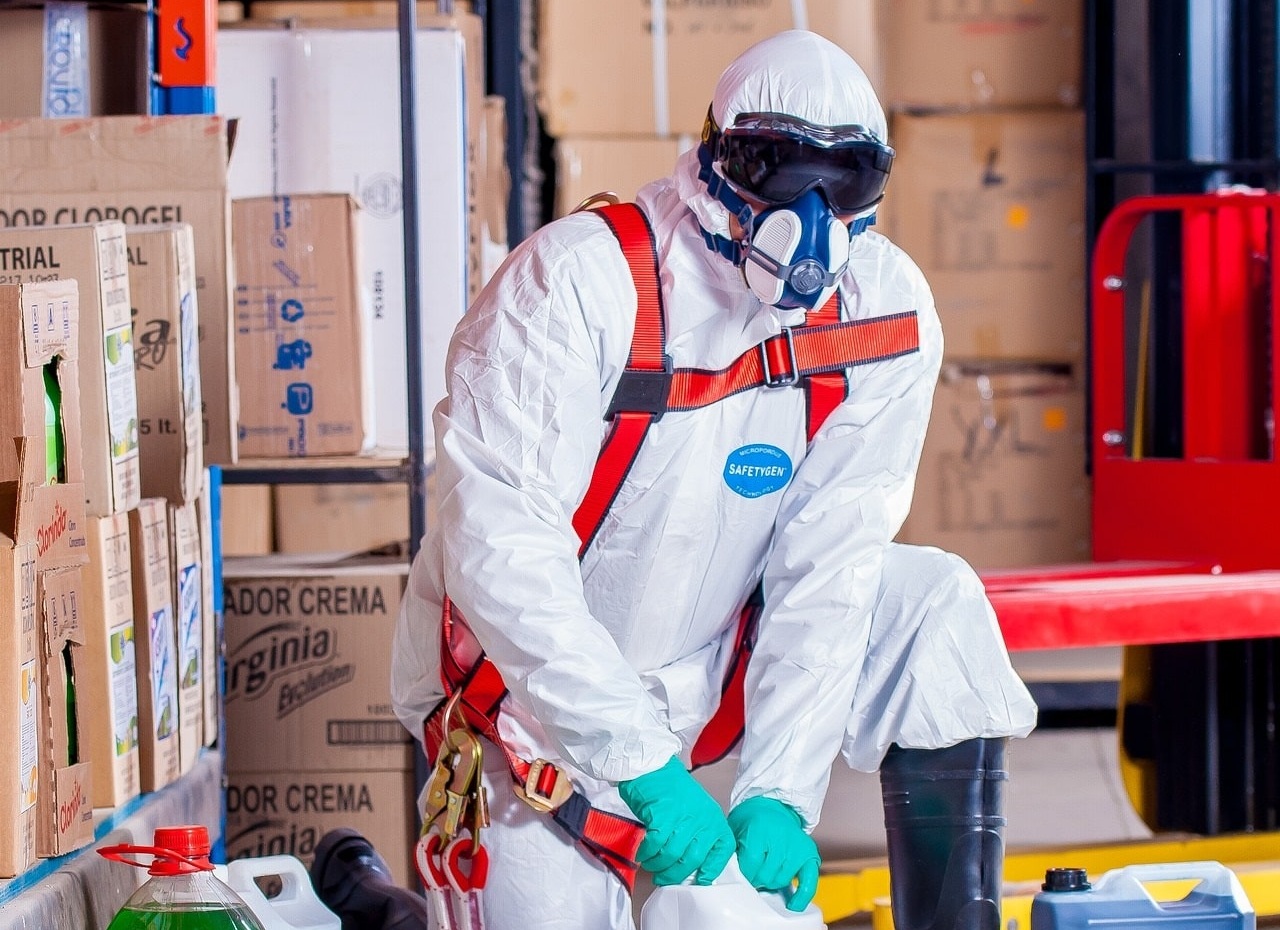
This course is aimed at anyone that uses hazardous subsatnces as part of their work.
Course Overview
This course is designed to enable employees to gain an understanding of the risks posed by hazardous substances and the duties placed on them and their employers under the Control of Substances Hazardous to Health Regulations. Delegates will learn about the main documents associated with hazardous substances and what they should expect from their employer before using one in the workplace.
Legionella Awareness (1 hour)

Who is this course suitable for?
This course is suitable for school leaders and site staff which require an understanding of he risks posed by the school's water system and how those risks should be controlled.
Course Overview
This course will give delegates a greater awareness of the health risks associated with Legionella bacteria within educational establishments and how to reduce the risk.
Ladder & Stepladders (½ Day)

Who is this course suitable for?
This course has been designed for staff whose role will require them to use ladders and stepladders.
Course Overview
This course will enable delegates to appreciate if they should be using extension ladders and stepladders for the tasks they perform. They will understand how to safety use stepladders and extension ladders. We will explain the legal and practical measures required to be able to use ladders and stepladders whilst remaining compliant with the Work at Height Regulations.
The course includes a practical element and therefore a reasonable level of fitness is required.
Health and safety e-learning is a useful method for schools, academies and colleges to begin to establish and maintain the competence of their staff. Although e-learning is a quick and convenient way for many delegates to learn, it must not be used in isolation; as e-learning cannot in itself develop all the compentencies which an employee or manager will require. This is particularly true for areas where practical skills are required such as manual handling or working at height.
The oneSource Health and Safety Team offers a range of e-learning packages and individual courses. All of our courses are either produced by our Team of advisers or Learning Nexus, one of the UK's premier content providers. Many of their health and safety courses are also accedited by RoSPA.
e-learning Packages for Schools and Colleges
The e-learning packages which oneSource offers include high quality courses on a range of health and safety topics, but they cover much more than these topics. Below is a list of the categories of training which the packages include (numbers in brackets indicate the number of courses in the category). Click on the heading to see more information:
- eBytes: Body Language;
- eBytes: Customer Service;
- eBytes: Health and Safety;
- eBytes: Information Security;
- eBytes: Leadership;
- eBtyes: Personal Development;
- eBytes: Social Care and Health;
- eBytes: Time Management;
- eBytes: Wellbeing.
- An Introduction to Legionella and its Control;
- Asbestos Awareness;
- Asbestos Basics.
- Staying Safe with DSE - An Overview;
- Staying Safe with DSE - Fixed DSE;
- Staying Safe with DSE - Fixed Workstations;
- Stauying Safe with DSE - Mobile DSE.
- Managing Electrical Safety - Controlling Electrcial Hazards;
- Managaging Electrical Safety - Identifying High Risk Electrical Hazards;
- Managing Electrical Safety - Inspection, Test and Maintenance;
- Managing Electrical Safety - Live Overhead or Buried Power Lines;
- Managing Electrcial Safety - Principles of Electricity and its Effects;
- Staying Safe with Electricity.
- Fire Doors - an overview;
- Fire Prevention and Evacuation;
- Fire Safety and Evacuation;
- Fire Safety and Evacuation Refresher;
- Safe Use of Fire Extinguishers.
- An Introduction to Basic First Aid.
- Allergic and Food Intolerant Customers;
- Food Safety Essentials;
- Food Safety in Catering.
- COSHH Awareness;
- Staying Safe with Hazardous Substances.
- Mental Health vs Stigmas;
- Mental Health Disorders, Symptoms and Treatments;
- Supporting Good Mental Health;
- What is Mental Health?.
- An Introduction to Healthy Home Working;
- Staying Safe with Electricity when Working from Home;
- Avoiding Slip, Trips and Fall when Working from Home;
- Setting up a Safe Workspace when Working from Home;
- Avoiding the Risk of Fire when Working from Home;
- Ensuring Healthy Temperature, Lighting and Ventillation when Working from Home;
- Staying Safe when Working from Home;
- Security Essentials when Working from Home;
- Protetcing Your Privacy when Remote and Home Working;
- How to Communicate when Working Remotely or from Home.
- An Introduction to Health and Safety at Work.
- Hand Hygiene - A Video Guide to Effective Hand Washing;
- Infection and Prevention Control.
- Lone Worker Types and Typical Risks;
- Lone Working - Hazards and Risks.
- An Introduction to Manual Handling;
- Safe Manual Handling Refresher.
- Accidents;
- An Introduction to Managing Health and Safety;
- Educational Visit Co-ordinator - Havering Systems (LBH system specific course);
- Educational Visit Leader (LBH system specific course);
- Health & Safety Awareness for Governors & Trustees;
- Managing Contractors;
- Near Misses;
- Protecting the Environment at Work and at Home;
- Staying Safe in Confined Spaces;
- Staying Safe with Noise.
- Ionising Radiations - A Background;
- Ionising Radiations - Risk Control;
- Non-Ionising Radiations.
- Introduction to Risk Assessment;
- Risk Assessment for Managers.
- Slips, Trips and Falls;
- Slips, Trips and Falls Refesher.
- Driver Safety Awareness;
- Managing Workplace Transport Health and Safety Risks;
- Safe Working with Workplace Transport.
- Introduction to Violence and Aggression at Work;
- Handling Violence and Aggression at Work;
- Dealing with Violence and Aggression at Work;
- Dealing with Violent Behaviour;
- Personal Safety inOther People's Homes and Premises.
- An Introduction to Working at Height;
- Working at Height - Fragile and Degraded Surfaces;
- Working at Height - Scaffold and Scaffold Towers;
- Working at Height with Access Equipment - Laddes, Stepladders and MEWPs.
- Domestic Abuse Awareness;
- Harmful Sexual Behaviour - Children and Young Prople;
- The Care Act: Integration, Cooperation and Partnerships;
- The Care Act: Transition to Adulthood;
- The Care Act: Person-Centred Care and Support;
- The Care Act: Charging and Financial Assessment;
- The Care Act: First Contact and Idenrtifying Need;
- The Care Act: Information and Advice;
- The Care Act: Introduction and Overview;
- Basic Life Support;
- Child Neglect and its Causes;
- Duty of Care;
- Effiective Communication in Health and Social Care;
- Equality and Diversity in Health and Social Care;
- Fluids, nutrition and food safety;
- Handling Information in Health and Social Care;
- Health and Safety in Health and Social Care;
- Mental Health, Dementia and Learning Disability;
- Person-Centred Practice;
- Personal Development;
- A Guide to GDPR;
- A Quick Guide to GDPR;
- Age Discrimination;
- An Introduction to Freedom of Information;
- Bribery Act;
- Cyber Security;
- Data Protection Act 2018;
- Dealing with requests for FOI;
- Direct and Indirect Discrimination;
- Disability Discrimination;
- Diversity & Equality;
- Ensuring Equality in Applications and Interviews;
- Ensuring Equlaity when Advertising a Job;
- Equality when Recruiting;
- Exemptions to FOI;
- Flexible Working;
- GDPR;
- Gender Reassignment Discrimination;
- Harassment, Victimisation and Bullying;
- Harassment, Victimisation and Bullying in Action;
- Information Security;
- Information Sharing with the Police;
- Introduction to Information Governance;
- Maternity Leave;
- Modern Slavery;
- Paternity and Adoption Leave;
- Paternal Bereavement Leave and Pay;
- PCI-DSS;
- Protecting Confidential Information;
- Race Discrimination;
- Reasonable Adjustments;
- Record Management and Data Quality;
- Religion, Belief and Non-Belief at Work;
- Right to Work;
- Sex Discrimination;
- The Caldicott Principles;
- Unpaid and Shared Parental Leave;
- What is Disability?;
- What is Religion, Belief and Non-Belief?;
- Whistleblowing.
- An Introduction To Mentor4Managers;
- M4M: Job Seekers;
- M4M: Managing Teams;
- M4M: Meetings Management;
- M4M: New Management Issues and Skills;
- M4M: People Skills;
- M4M: Performance Management;
- M4M: Time Management.
- An Introduction to Meetings & Meeting Types;
- An Introduction to Negotiation;
- An Introduction to Time Management;
- An Overview of Performance Appraisal;
- Attracting Candidates and Producing Job Advertisements;
- Creating SMARTER Objectives;
- Delegation;
- Delivering Presentations;
- Job Alaysis, Job Descriptions and Person Specifications;
- Negotiating Strategies 2: Psychological Strategies;
- Negotiation Strategies 1: Strategy Basics;
- Ongoing Appraisal;
- Organising and Running Effective Meetings;
- Preparing for Presentations;
- Preparing for the Appraisal;
- Shortlisting Candidates and Selection Techniques;
- SMARTER Objectives for Managers;
- The Appraisal Discussion;
- The Importance of Setting Goals in Time Management;
- The Recruitment Process - An Overview;
- Thw Role of the Coach;
- Time Management: Deciding the Priorities;
- Time Management: Managing Disruption and Keeping Focussed;
- Time Management: Planning and Scheduling;
- Undersytanding and Handling Meeting Behaviour.
- Hnadling Stress at Work - A Guide for Managers;
- Handling Workplace Stress;
- Preventing Bullying in the Workplace;
- RSI - Repetitive Strain Injury.
- A Background to Body Language;
- Barriers to Listening;
- Becoming a Better Listener;
- Body Language for Sales;
- Body Language for Interviews;
- Understanding Body Language;
- Unproductive Questions;
- Using Open & Closed Questions;
- Why Questions are important;
Individual e-learning Courses
As well as the courses offered through the Team's e-learning packages we also develop individual courses aimed specifically at schools and academies:
 |  |
 |  |
If you have a requirement which is not covered in the above lists please contact us to discuss your organisation's specific needs.
Fire Services for Schools & Colleges
oneSource offers a range of services to enable the effective management of fire safety in schools, colleges and other educational establishments. We have a team of fire safety advisers and technicans who are experienced in working with schools, academies and colleges to assist them to comply with the fire safety regulations applicable to their sites. Information on the fire safety services can be found by clicking the appropriate bar below.
As well as the services and courses listed above we provide bespoke services. If you cannot find what you are looking for in the above sections please contact us to discuss your specific needs.