
Guidance on access & egress for classroom checklist
Flooring
Flooring needs to be smooth and provide a suitable level of grip for the intended activities. Look for lifting carpet tiles, rucked or torn carpet or vinyl covering and any uneveness in floor surface. If the room has more than one level, are transitions clear (e.g. edges of steps/slopes )
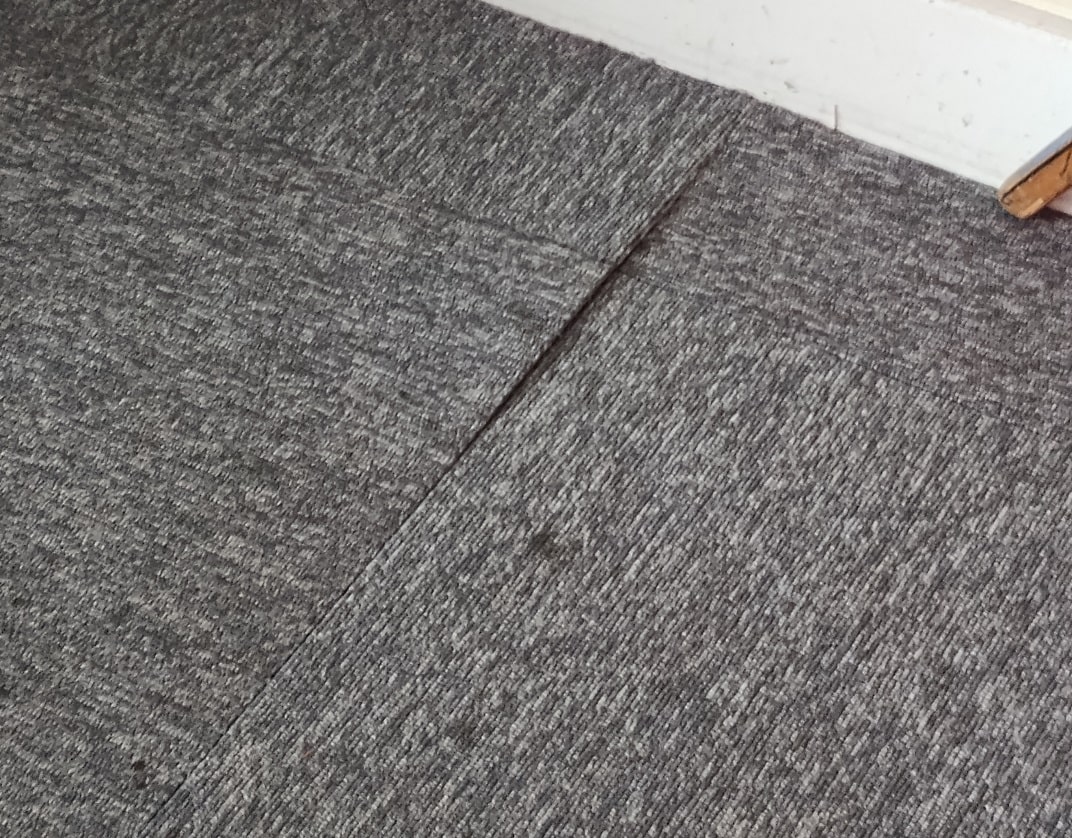
lifting carpet tiles
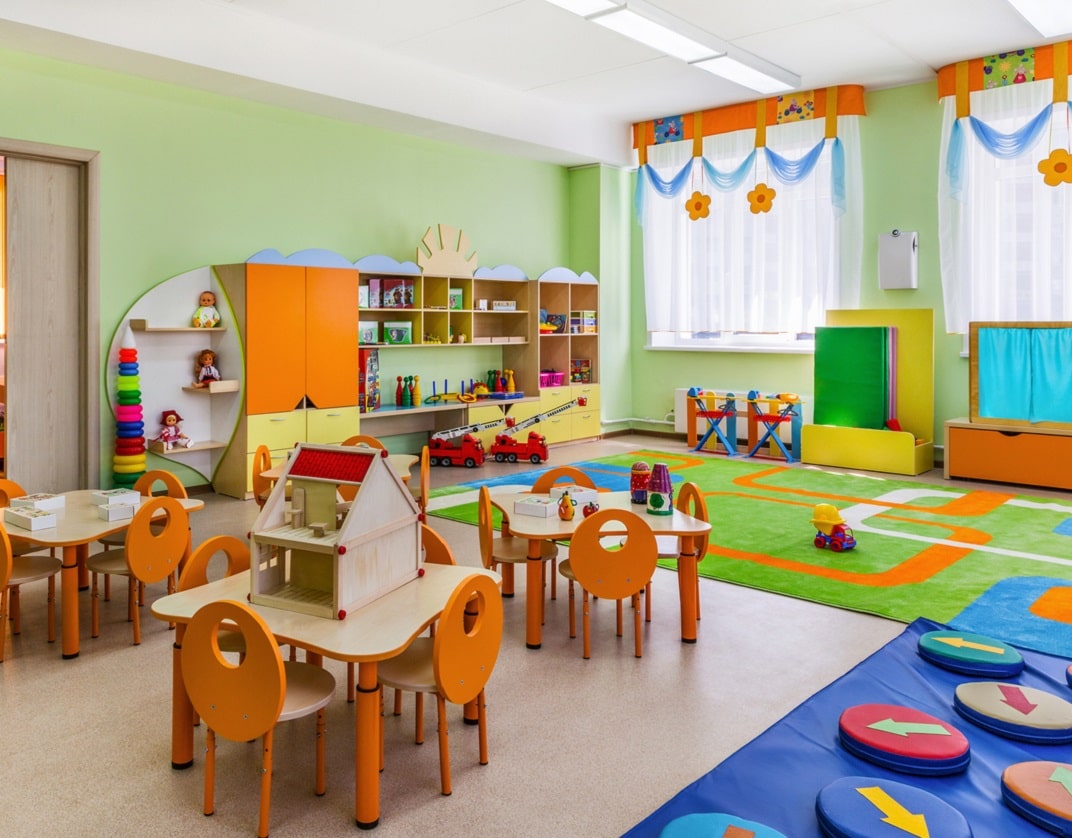
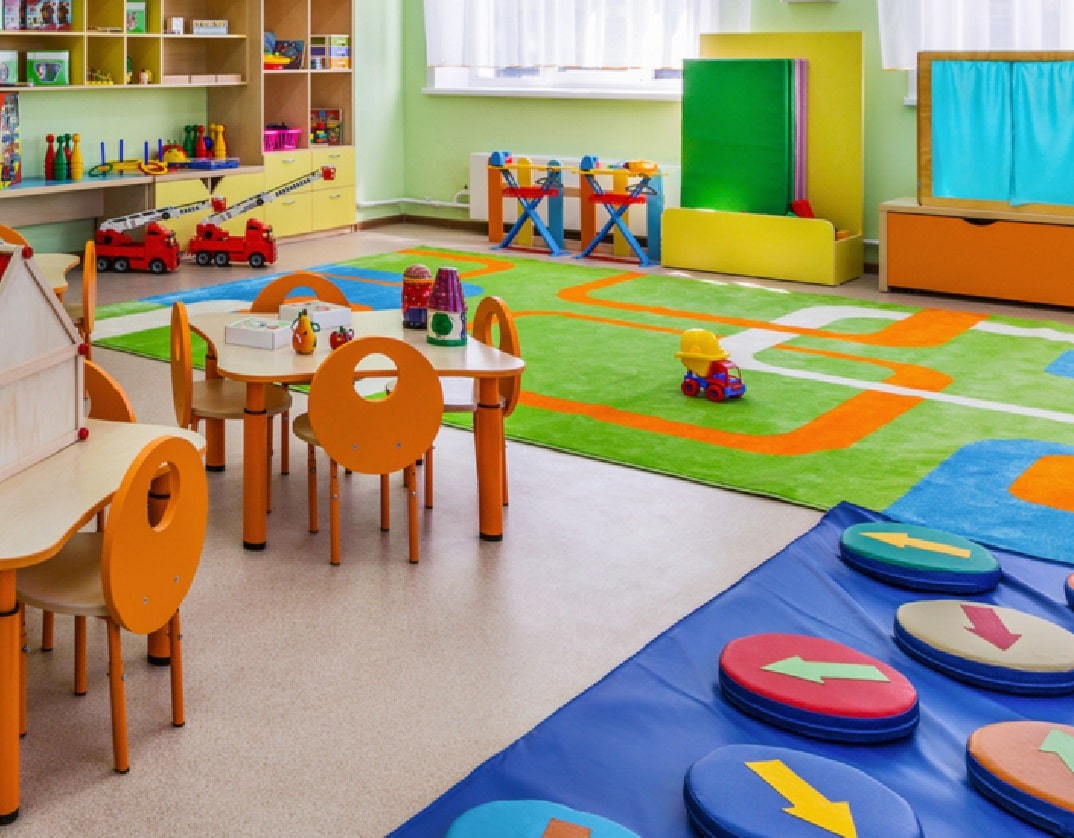
changes in the grip of surfaces pose tripping hazards, in this example from mats to vinyl flooring. consider if location of mats poses risk due to speed in area and anything someone could collide with if they trip
looking more closely in the same room, see the lifted mat edge where the two mats meet
Lighting
In relation to safe access and egress the required lighting levels are much lower than those at a desk or workstation. The lighting needs to be sufficient to enable hazards to be seen. Be aware that excess light can also prevent people from seeing hazards. The standard of lighting in most classrooms should mean that a lack of light isn't an issue, but check for any areas where it considerably darker than the rest of the room. Also look for any areas where lighting is considerably brighter than the surrounding areas. Be aware of significant changes in light levels at entrance and exit doors and going into walk-in cupboards, as this can cause issues due to the human eye's slow response rate to light intensity changes.
This classroom's store cupboard lights don't work - this will increase the likelihood of slips and trips due to the slow response rate of human eyes to large changes in brightness levels
Room layout
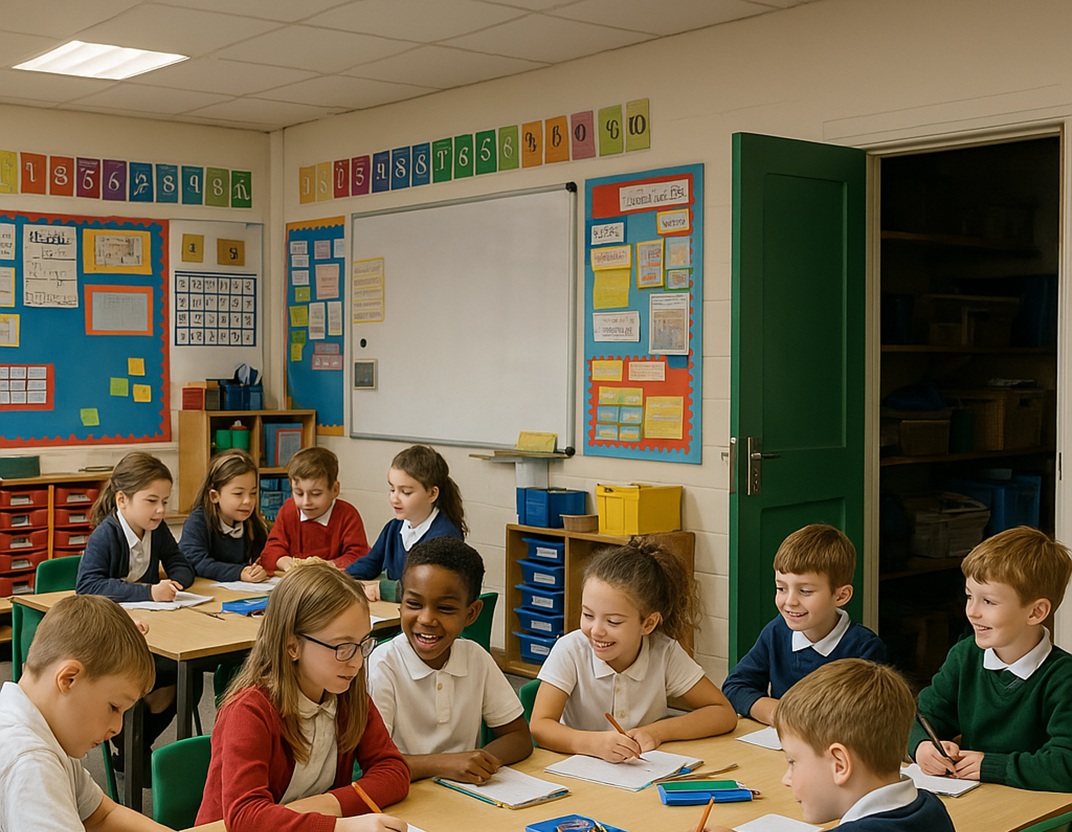
Checking the room layout for suitability is best done whilst it is occupied. This is because you will then see how much space is taken-up when students are sitting at their desks and potentially have their possessions with them. Check gangway widths, can someone pass through unhindered or are bags, coats, furniture or the shoulders of those seated obstructing the walkways. Remember if access is difficult in a calm classroom, it will only get worse in an emergency evacuation situation . The routes to the entrance door & fire exit door should be both as short and straight as possible.
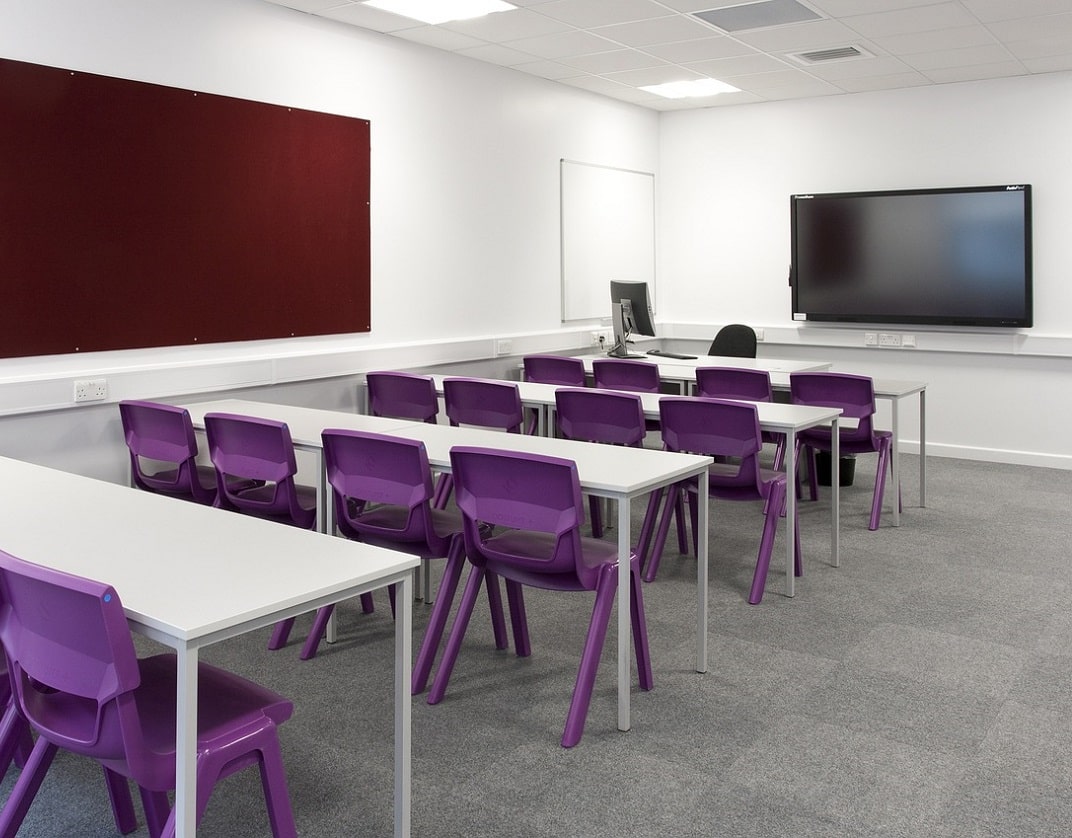
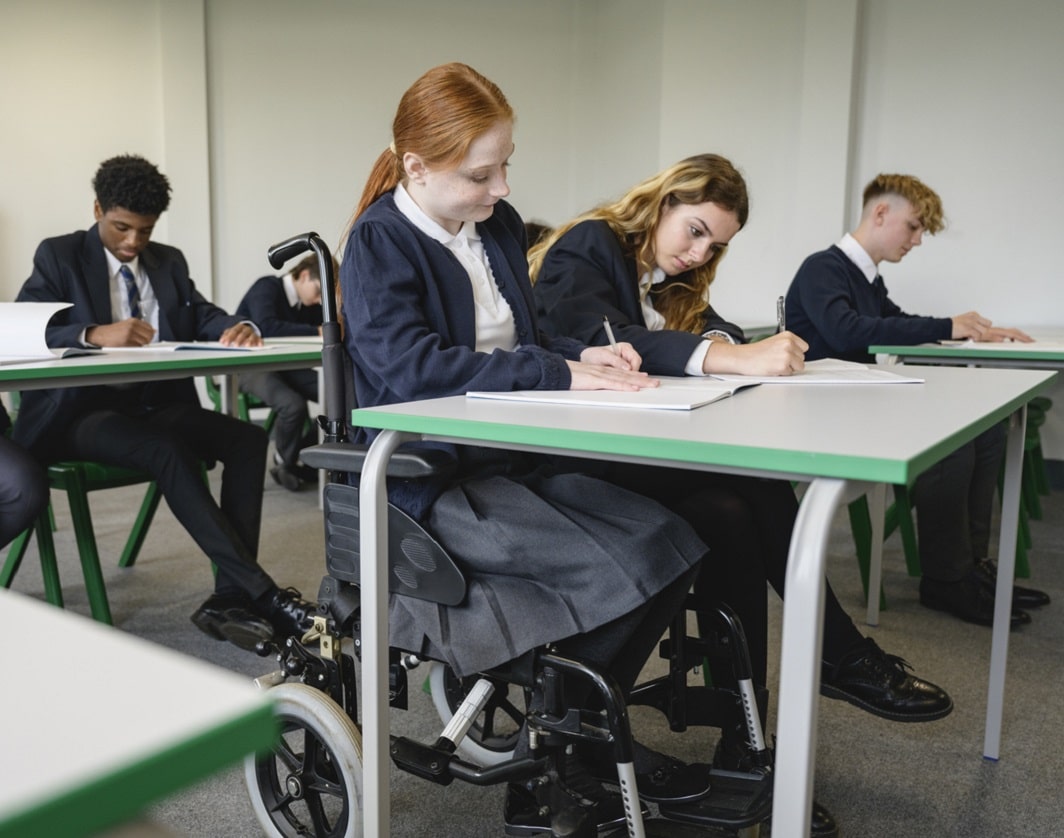
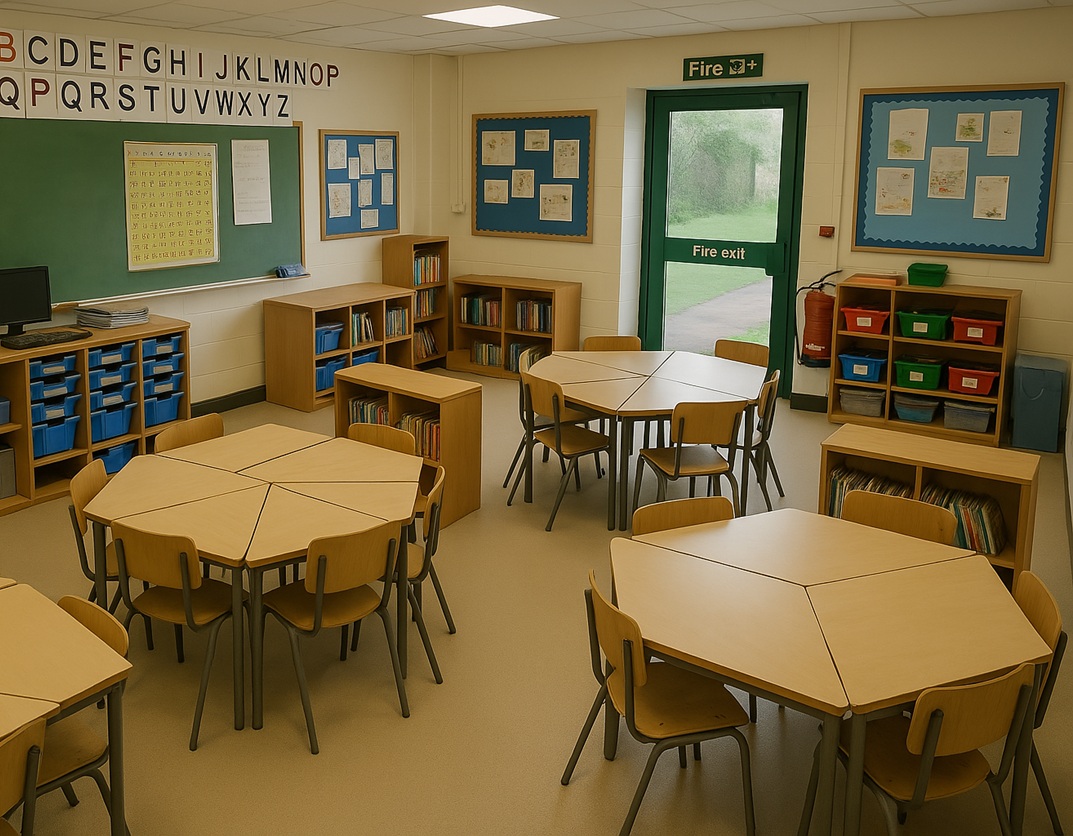
desks and walkways need adequate space
does the layout allow for people with impairments to easily evacuate?
is there a clear route to the fire exit once pupils have sat down? A few simple changes could greatly improve access
Trip Hazards
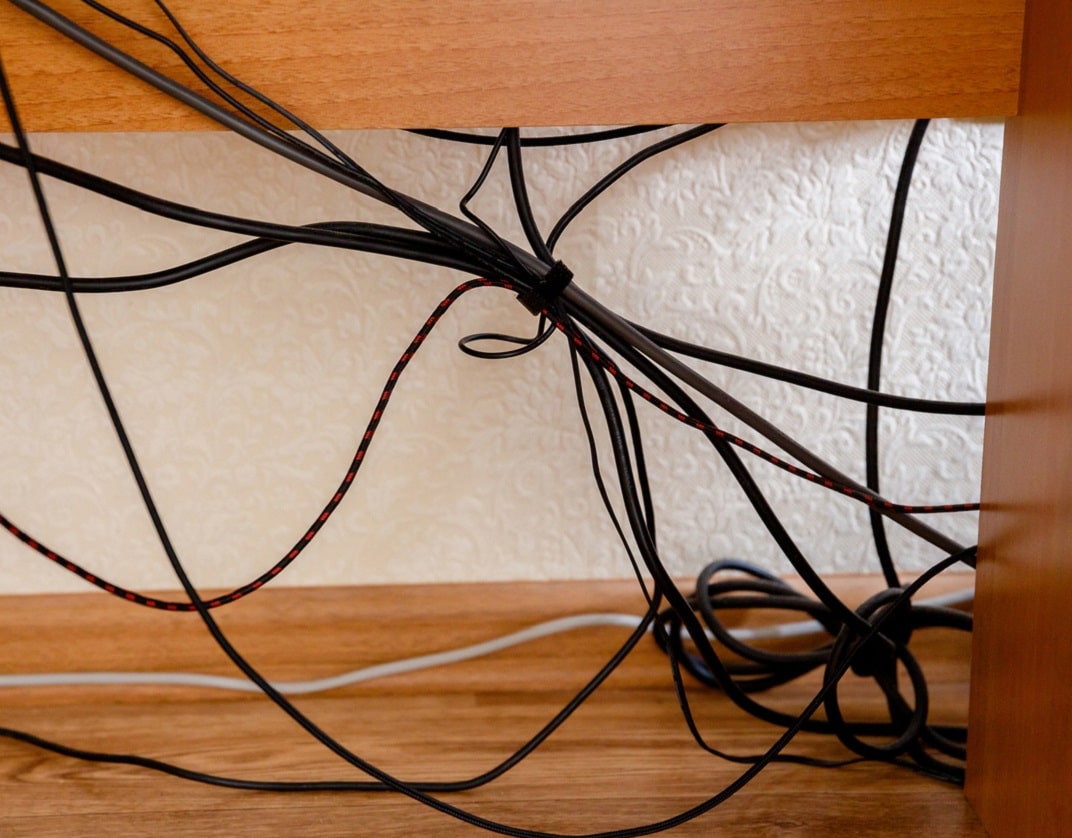
As well as the previously mentioned issues with the floor covering, check for bags, coats, extension leads, books, paper, storage boxes, legs of portable equipment & contminants (such as water, food, drinks, glue & paint etc. which has been spilt or leaked onto the floor.) posing tripping hazards.
Appropriate equipment should be available to clear-up any spills or leaks (e.g. paper towels, mop & bucket, wet vacuum cleaner etc.).

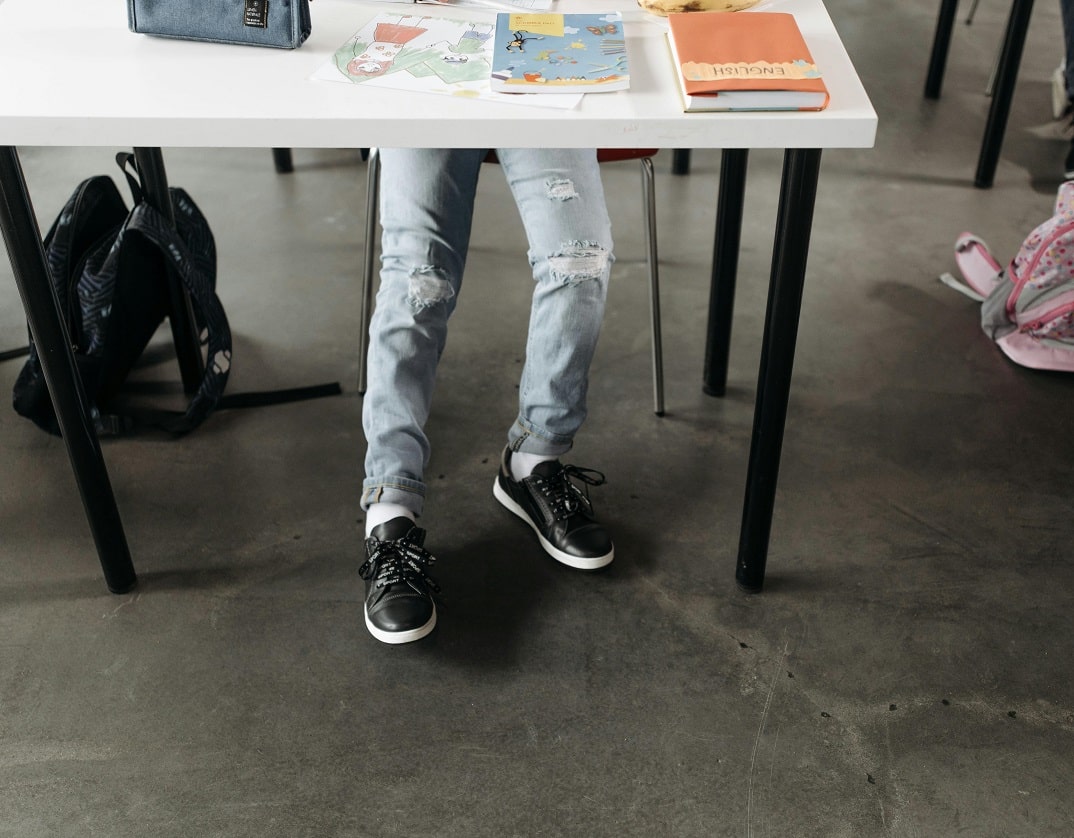
spilt water
trailing leads under a desk
students' bags and their handles
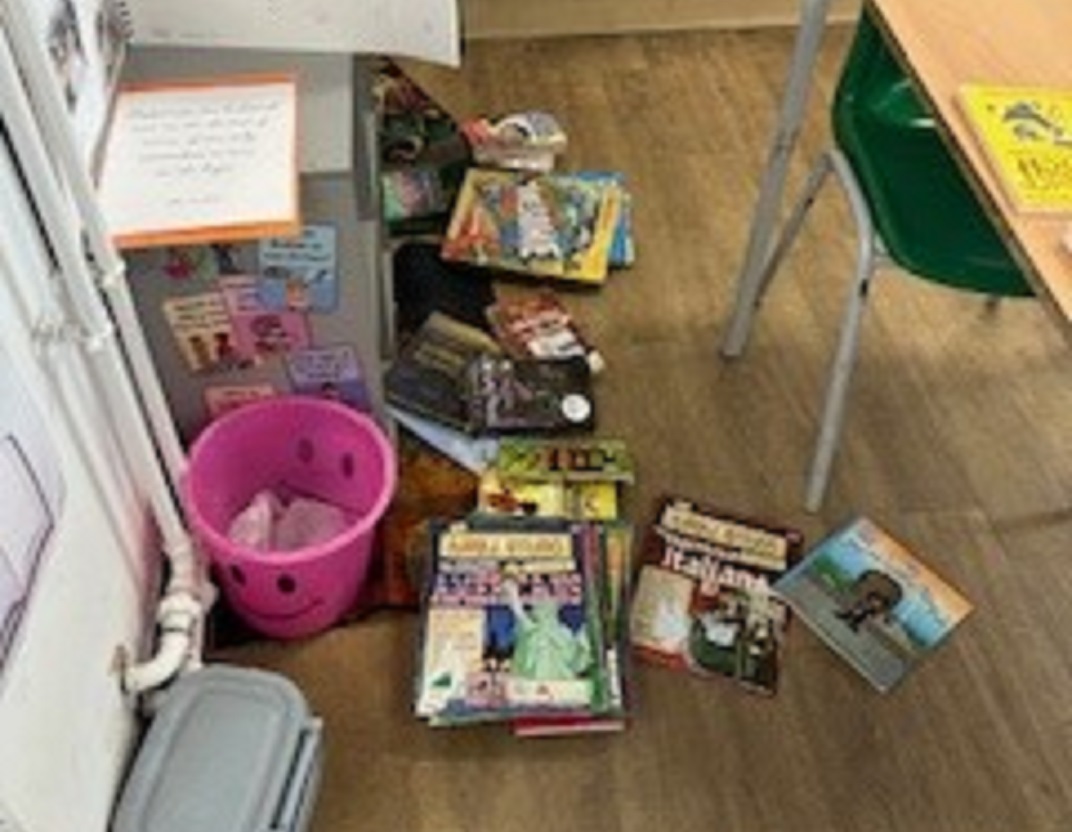
books on floor in narrow walkway
Finger Traps
If your classroom is used by young children (keystage 1 or below) any doors should be fitted with hinge guards. The guards are generally made of plastic (occaisionally rubber), which will fail due to the repeated opening and closing of the door. Check the hinge guards are not split or loose.
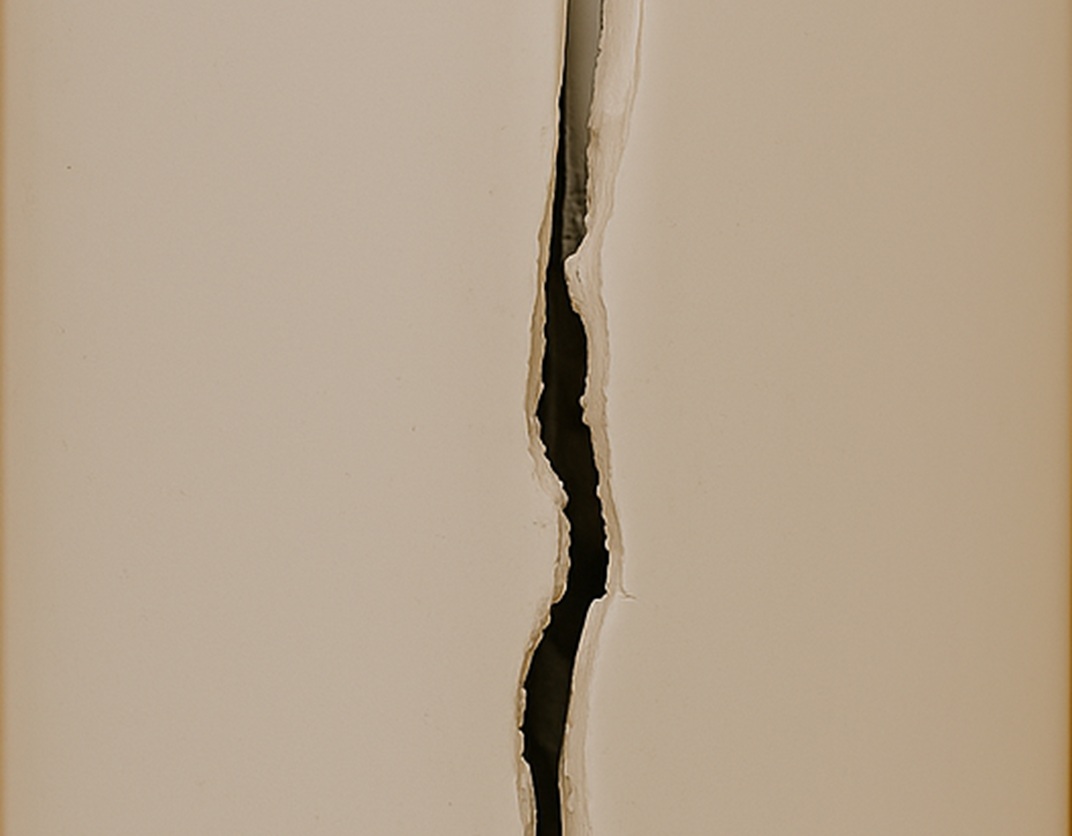
the plastic hinge guards are made of will fail over time, check for cracks and missing pieces
Return to Classroom Health & Safety Checklist PDF Return to Classroom Health & Safety Checklist main page